Bishnu Solar Scooter
Introduction
The Bishnu Solar Scooter is an innovative step towards sustainable transportation, harnessing renewable solar energy to power a two-wheeler vehicle. With the impending scarcity of non-renewable energy sources, adopting renewable energy like solar power is crucial.
In countries like Nepal, the dependency on petroleum products is high—with consumption growing over 21% annually. The rapid increase in vehicles, especially two-wheelers (which make up 79% of registered vehicles), exacerbates this issue. The Bishnu Solar Scooter offers an alternative that reduces fossil fuel consumption and its environmental impact.
Concept and Functionality
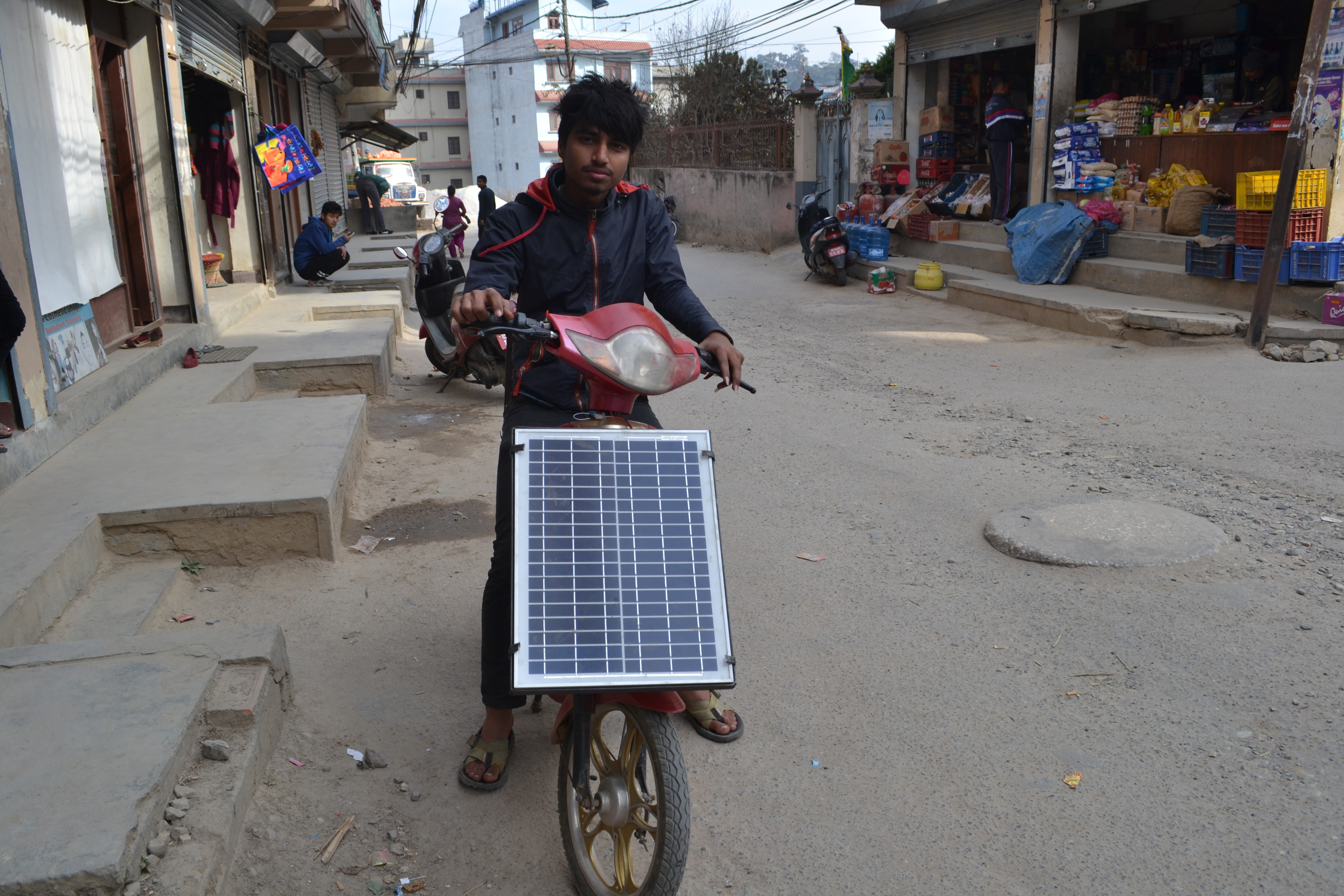
The scooter operates on energy stored in batteries charged via solar panels. An 80W solar panel mounted on the scooter captures solar energy and converts it into electrical energy stored in the batteries, which then powers an electric motor to propel the scooter.
The adoption of solar-powered scooters can significantly reduce reliance on imported petroleum products, help improve air quality, and contribute to a sustainable future.
Why Solar Energy?
Nepal has immense solar energy potential, estimated at 50,000 terawatt-hours per year. Solar energy is becoming increasingly cost-effective—often cheaper than fossil fuels. According to the 2020 World Energy Outlook by the International Energy Agency, solar PV is now "the cheapest source of electricity in history" for projects with low-cost financing and high-quality resources.
Visual Demonstration
Scooter Demonstration Video
Future Concept of Solar Two-Wheelers
Impact on Society
Implementing solar-powered scooters on a larger scale can:
- Reduce the national trade deficit by decreasing petroleum imports.
- Promote environmental sustainability by lowering emissions.
- Provide affordable transportation using abundant solar resources.
Call to Action
Embracing solar energy in transportation is more than just an innovation—it's a necessity. By supporting projects like the Bishnu Solar Scooter, we take a significant step toward a sustainable and prosperous future.
← Back to Portfolio